
Yes. Perfectly, in fact. You can apply, enroll, attend every class, write every paper, and graduate from a Taiwanese university without ever needing to read a single character of Mandarin. This surprises a lot of people who assume Taiwan works the way China does, entirely in Chinese, entirely intimidating. It doesn't. Taiwan has spent the better part of two decades deliberately building out English-language higher education, and the numbers back that up.
The numbers
Taiwan's Ministry of Education puts the country at almost 500 English-taught degree programs, spread across more than 40 universities, covering everything from computer science and semiconductor engineering to business, public health, and international relations. That's not a handful of token programs bolted on to look internationally friendly, it's a genuinely broad system.
It's working, too. According to MOE data reported by Focus Taiwan, international student enrollment hit 123,188 in the 2024/25 academic year, a five-year high and roughly 7% up on the year before. ICEF Monitor reports Taiwan's official target is 320,000 international students by 2030, more than double where the country sits today, with a stated goal of retaining roughly two-thirds of foreign graduates to work in Taiwan afterward. If you want to see the actual list of English-taught programs and search by field, the government-run Study in Taiwan portal is the most useful starting point, and it's a lot more current than most third-party guides.
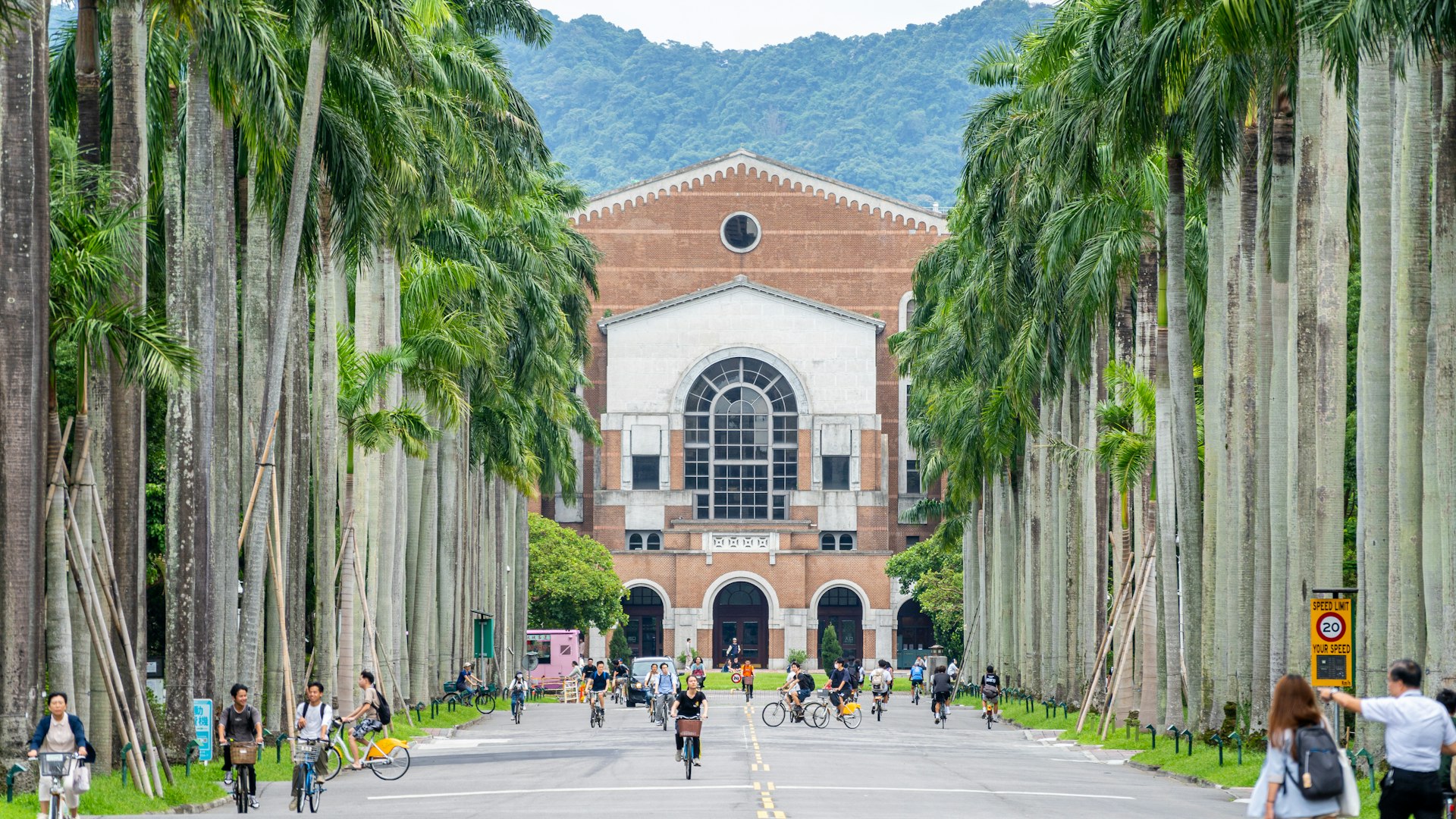
Top public universities lead the way. National Taiwan University alone runs over 40 English-taught programs, including a Global Undergraduate Program in Semiconductors. National Taiwan Normal University has built its entire international strategy around bilingual education and now hosts more foreign students than any other university in the country. National Tsing Hua and National Yang Ming Chiao Tung, Taiwan's two leading technical universities, both run substantial English-medium graduate programs in engineering and applied sciences.
What this looks like after graduation
This is where it gets genuinely interesting, and where Taiwan differs from a lot of countries that offer English-taught degrees but then quietly expect fluent local language ability the moment you try to get hired. Taiwan's semiconductor industry is short by roughly 34,000 workers, according to industry data compiled by Cake, across production, R&D, quality control, and technical support, and that shortage is only getting worse as fabs expand. TSMC, ASML, Micron, and dozens of smaller players are actively recruiting international engineers, researchers, and technicians, and a meaningful share of those roles, especially in R&D and multinational operations, run in English by design.
The same pattern holds in AI, software development, and a growing number of tech-adjacent roles. Companies competing globally for talent, and increasingly competing against Singapore, Japan, and South Korea for the same pool of foreign engineers, have simply stopped treating Chinese fluency as a hard requirement for these specific tracks. If you graduate from one of Taiwan's English-taught STEM programs with real technical skills, the job market genuinely does not require you to speak Chinese to get hired.
Taiwan's government has also built the paperwork to match. The Employment Gold Card, covered in more detail in our piece on starting work in Taiwan after graduation, bundles your work permit, residence visa, ARC, and re-entry permit into a single approval, and it's specifically designed for the kind of specialized graduate this system is producing. You can also find it, along with other useful programs, in my Taiwan organizations directory.
Where "no Chinese needed" starts to have limits
It's worth being precise here rather than overselling it. A Rest of World investigation into Southeast Asian students training for Taiwan's semiconductor industry found that outside the specific English-track roles at multinational-facing companies, Mandarin is still commonly expected, particularly for anything involving local suppliers, domestic clients, or day-to-day floor operations at Taiwanese-owned firms. The "no Chinese required" pathway is real, but it's concentrated in specific tracks: multinational R&D, international sales, certain software and AI roles, and academia. It is not the default across the entire Taiwanese job market.
My honest advice anyway
Here's the part I'd want someone to tell me honestly before I made this decision myself. Living, studying, and working in Taiwan without speaking Chinese is completely doable. I'm not walking that back. But it will, eventually, isolate you from the society you're actually living in. You can build a genuinely comfortable life inside an English-speaking expat and international-student bubble, good friends, familiar food, coworkers who share your language, and honestly a lot of people do exactly that and are happy. But at some point you'll hit a wall that a comfortable bubble can't get you past: the doctor's appointment where nobody speaks English, the landlord dispute, the moment a friendship with a Taiwanese colleague can't go deeper because you're always the one who needs things explained. Building a real life somewhere while remaining permanently a guest in it is possible, but it isn't easy, and it isn't something I'd want for anyone who's planning to stay long-term.
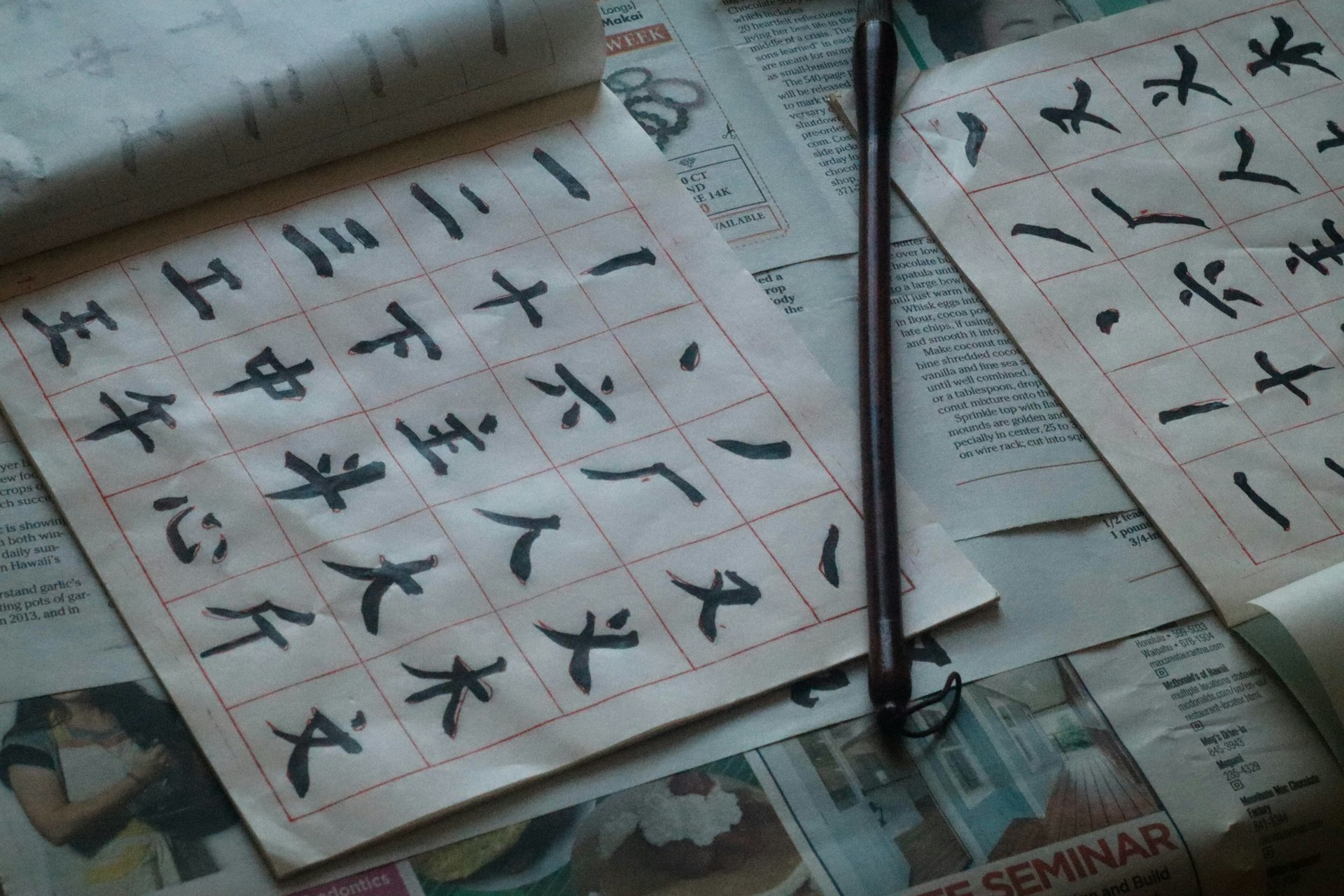
I go into this in more depth in Studying Chinese in Taiwan: when it's worth it and when it's not, but the short version is this: take Chinese learning seriously, and actually enjoy the process rather than treating it as a chore bolted onto your real life here. It changes how deeply you can connect with the place, and it's exactly the gap I pointed to when Taiwan was recently ranked the 5th best country in the world to relocate to: the report's own weak point for Taiwan was limited English-language accessibility outside these specific tracks, and Mandarin is the thing that actually closes that gap.
It's also simply a good long-term bet regardless of where you end up. Whether you build your career in Taiwan permanently or eventually move somewhere else entirely, fluent Mandarin is one of the more valuable, transferable assets you can walk away with. It doesn't expire, and unlike a lot of what you'll learn in a specific job, it travels with you.
If you're weighing this decision
If you're trying to figure out whether an English-taught program in Taiwan is realistic for your situation, or how the Chinese language piece fits into your longer-term plans here, we've also covered how to actually go about finding a job in Taiwan and where to start building a network once you're here, both of which matter more than people expect once classes are over.
If you want to talk through your specific situation, whether that's choosing between programs, figuring out visa pathways, or just deciding if this move makes sense at all, get in touch.
Moving to Taiwan?
Most Taiwan content is either a love letter or a horror story. I help foreigners figure out if Taiwan is actually right for them — before they upend their lives, quit their jobs, or spend money they can't get back.


"Most people who move to Taiwan stay for a semester. I stayed for six years — and I'm still not done."